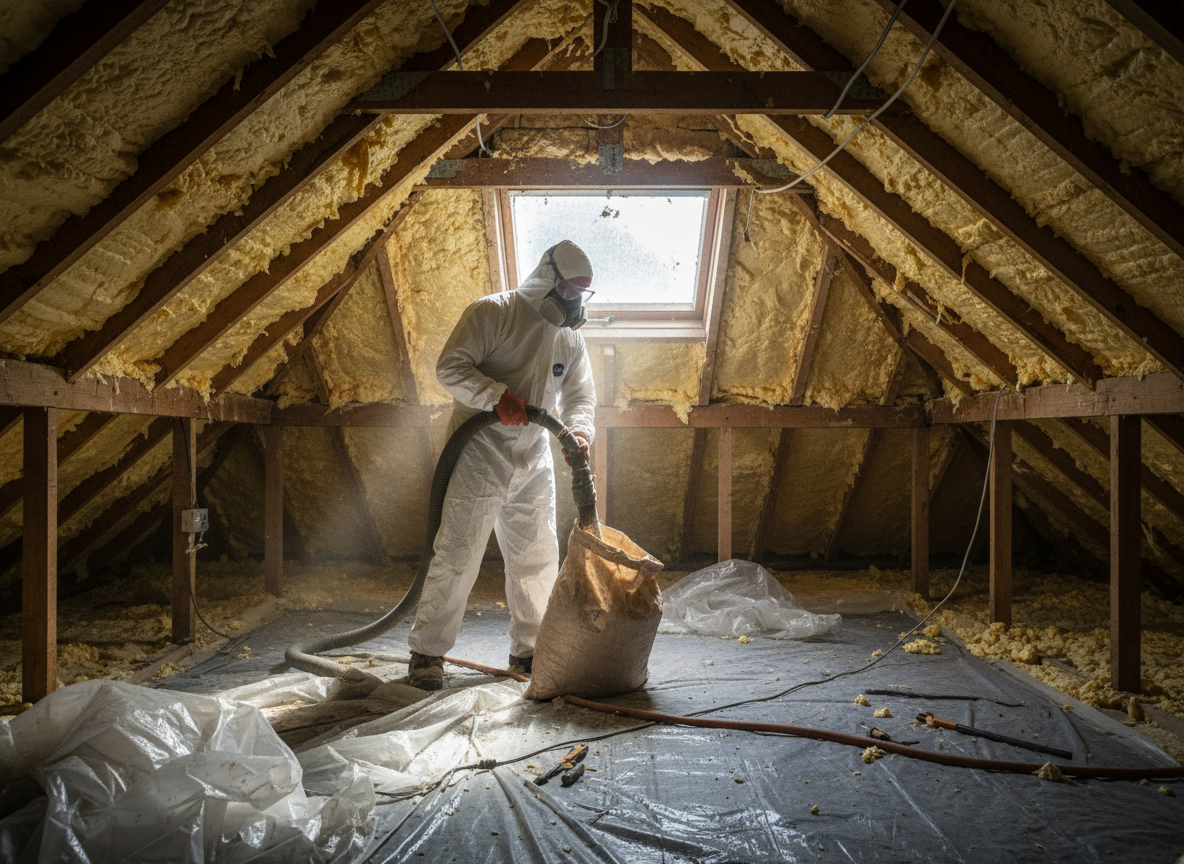
York's older housing stock, particularly Victorian terraces and Georgian properties common in areas like Heslington and the city centre, often contains closed-cell spray foam installed in the 2000s that has since failed due to moisture trapping and poor ventilation. Removing it requires careful cutting and extraction to avoid damaging original timber joists or lathe and plaster ceilings below, especially where the foam has bonded to historic roof structures exposed to the region's frequent rainfall and high humidity.
Winter conditions in North Yorkshire accelerate problems with spray foam because cold air from the Vale of York meets warmer loft spaces, creating condensation that degrades the material and encourages mould growth. Technicians must work around limited access hatches typical in these homes, using negative air machines to contain dust while separating the foam from rafters without compromising the roof's integrity during wet weather windows.
Handling Period Property Challenges
York's listed buildings and conservation areas demand extra care during removal to prevent structural issues in pitched roofs that have settled over decades. Foam often fills voids around chimney stacks and party walls, requiring targeted disassembly rather than bulk stripping to maintain fire separation standards.
Seasonal Considerations for Removal
Work in spring and summer avoids the damp winters that make foam more brittle and harder to separate cleanly. Homeowners in suburbs like Acomb and Fulford frequently schedule around school holidays when lofts can be fully cleared of stored items affected by the local climate's freeze-thaw cycles.
Technician insight
In York, the thing that catches most people out with loft spray foam removal is how the foam has wicked moisture from the damp Yorkshire air into the original roof timbers around chimney breasts, especially in pre-1900 terraces near the Ouse. Homeowners often underestimate how much extra time it takes to separate it cleanly without cracking aged plaster ceilings below.
Heslington Terrace Loft Clearance
Foam in a 1920s semi-detached loft had trapped condensation against rafters, causing mould. We found it adhered tightly around the chimney stack. Extraction took three days with careful sectioning to protect the lathe ceiling. The loft was left clear and ventilated, stopping further moisture issues.
How it works
- 1
Site Assessment
Inspect the loft space, identify foam type and adhesion points, and check for underlying issues like damp in York properties.
- 2
Containment Setup
Install dust barriers and ventilation controls to protect living areas below during extraction.
- 3
Foam Removal
Cut and peel foam in sections, clearing it from joists and rafters without damaging original timbers.
- 4
Cleanup and Disposal
Remove all debris, vacuum residues, and dispose of waste according to local regulations.
- 5
Final Inspection
Verify the loft is clear and advise on ventilation improvements suited to North Yorkshire conditions.
Pricing
Cost depends on loft size, foam depth, and access difficulty in older York homes; contact for assessment.