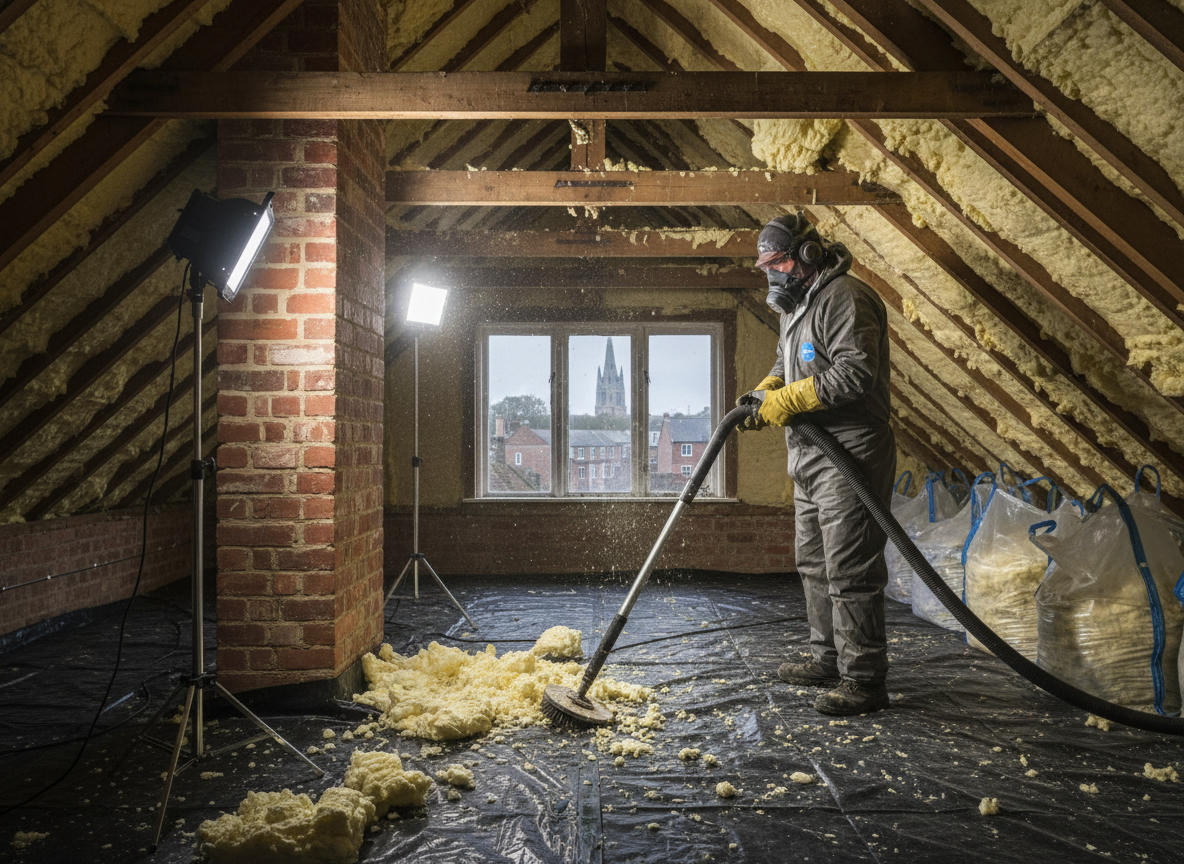
York's older housing stock, including Victorian terraces and Georgian properties around Heslington and the city centre, often features tight roof voids and original timber that can trap moisture when spray foam is applied directly to the underside of the roof. Removal requires careful separation of the foam from rafters without damaging historic lath or slate fixings, especially during the damp winters when condensation builds quickly in unventilated spaces. Crews at ZenithShield Group work from Providence House in Heslington and respond 24/7 to limit further water damage once foam starts breaking down.
North Yorkshire's frequent rain and fluctuating temperatures accelerate foam degradation in many York attics, leading to sagging sections and hidden mould growth along wall plates. Technicians cut and peel foam in controlled sections, using negative-air machines to contain dust that can otherwise settle into nearby bedrooms. Edge cases include foam that has wicked into stone walls near the Minster or properties close to the Ouse where ground moisture rises through the eaves.
After extraction, attics are left clear for proper ventilation upgrades that suit the region's cold, wet climate rather than sealed systems that failed previously. Homeowners in areas like Acomb or Fulford often discover the foam has bridged original eaves, so the work includes restoring airflow paths to prevent recurrence.
Technician insight
In York, the thing that catches most people out with Attic spray foam removal is how the foam has wicked into the eaves on Victorian terraces near the city walls, especially after a wet winter when the Ouse levels rise and push extra moisture upward. Homeowners assume a simple peel will do it, but once you start cutting you find bridged vents that need reopening or the job leaves the roof colder than before.
Foam Removal in Heslington Victorian Terrace
Homeowner noticed ceiling stains after heavy autumn rain. We found spray foam had sealed the eaves and trapped condensation against the original rafters. The team cut sections free, restored ventilation gaps, and left the attic clear without disturbing nearby slate.
How it works
- 1
Site Assessment
Inspect attic condition, foam thickness, roof structure, and any signs of moisture in York properties.
- 2
Containment Setup
Install dust barriers and negative air to protect living spaces below during removal.
- 3
Foam Extraction
Cut and remove foam in sections, clearing rafters and eaves without damaging original timbers.
- 4
Final Clearance and Ventilation Check
Remove debris, verify airflow paths, and confirm the attic is ready for new insulation choices.
Pricing
Cost depends on attic size, foam depth, and access difficulty in older York roofs; quotes provided after inspection.