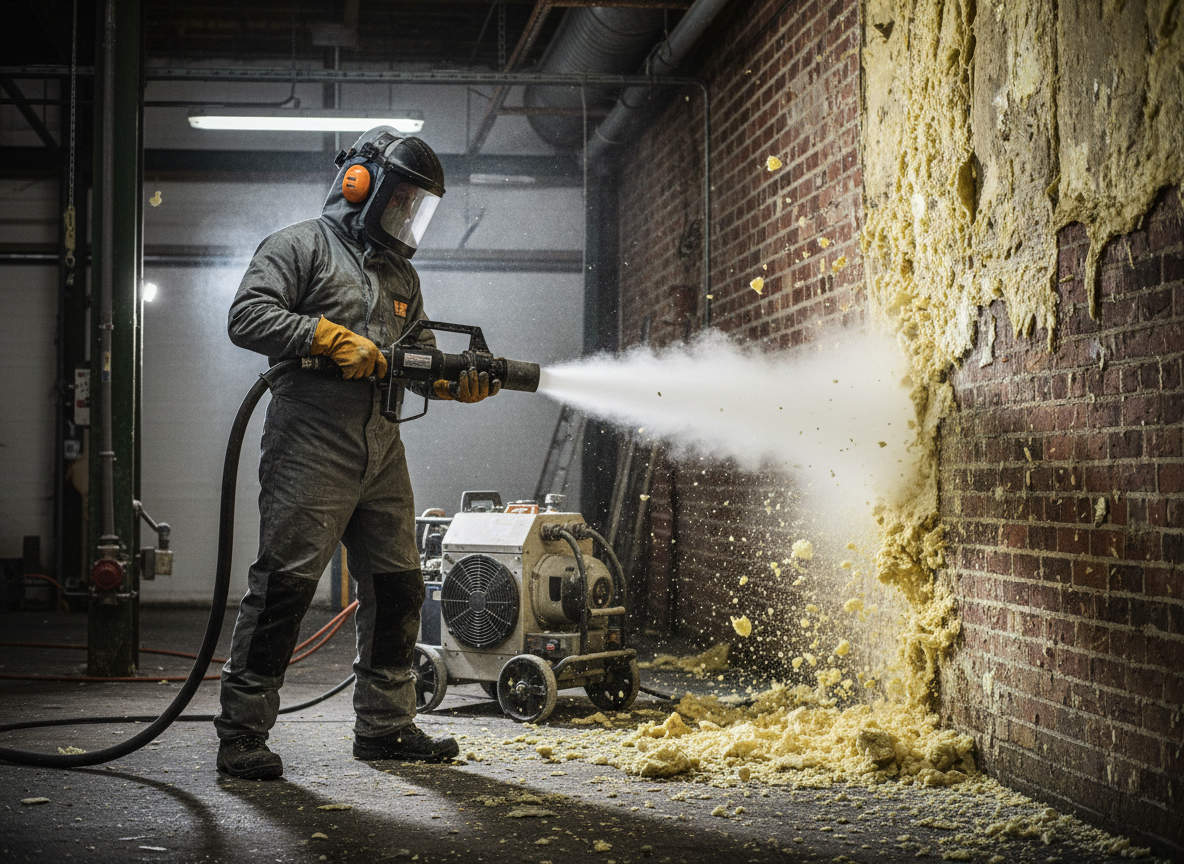
York's older housing stock, particularly Victorian terraces and stone buildings around Heslington and the city centre, often features spray foam applied directly to roof voids and under floors during the 1990s and early 2000s. Dry ice blasting removes this material cleanly because the pellets sublimate on contact, avoiding the water or chemical residue that can worsen damp in North Yorkshire's wet climate. Operators must work around tight access points common in these properties while protecting original timber joists and stonework from impact.
Seasonal temperature swings in the York area mean winter jobs require careful monitoring of substrate temperatures to prevent condensation forming behind remaining insulation layers. Dry ice blasting works well here because it leaves surfaces dry and ready for inspection, unlike wet removal methods that can introduce new moisture into already vulnerable crawl spaces. Homeowners in surrounding villages frequently discover foam breakdown after heavy rainfall periods when water tracks along the foam edges.
The process demands attention to ventilation in enclosed roof spaces typical of York terraces, where poor airflow can trap CO2 from the blasting process. Experienced crews ventilate through existing roof vents and monitor oxygen levels throughout the job. This method also reduces the risk of disturbing asbestos-containing materials sometimes present in mid-century additions common in the Heslington postcode.
After removal, surfaces in York properties often reveal original lath and plaster or stone that requires immediate assessment for rot or salt damage caused by previous foam trapping moisture. Dry ice blasting exposes these issues without adding further water, allowing owners to plan targeted repairs before re-insulating.
Technician insight
In York, the thing that catches most people out with dry ice blasting spray foam removal is the hidden moisture trapped against stone walls in Heslington properties where the foam was applied directly to porous masonry without a vapour barrier.
Heslington Terrace Roof Void
Foam in a 1930s stone terrace had started breaking down after repeated winter rains. Inspection showed water tracking along joists behind the foam. Dry ice blasting cleared the material cleanly, exposing the damp areas for targeted drying and repair without wetting the original structure.
How it works
- 1
Site Assessment
Inspect roof voids, floors and access points in the York property to map foam locations and check for hidden moisture or timber damage.
- 2
Preparation and Containment
Seal work areas and set up ventilation paths suited to older stone and timber construction common around Heslington and central York.
- 3
Dry Ice Blasting
Apply controlled dry ice streams to loosen foam without abrading historic surfaces or introducing moisture.
- 4
Debris Removal and Final Check
Vacuum residues and inspect exposed substrates for rot or salt efflorescence before leaving the site.
Pricing
Costs depend on access difficulty, foam thickness and property age in York.