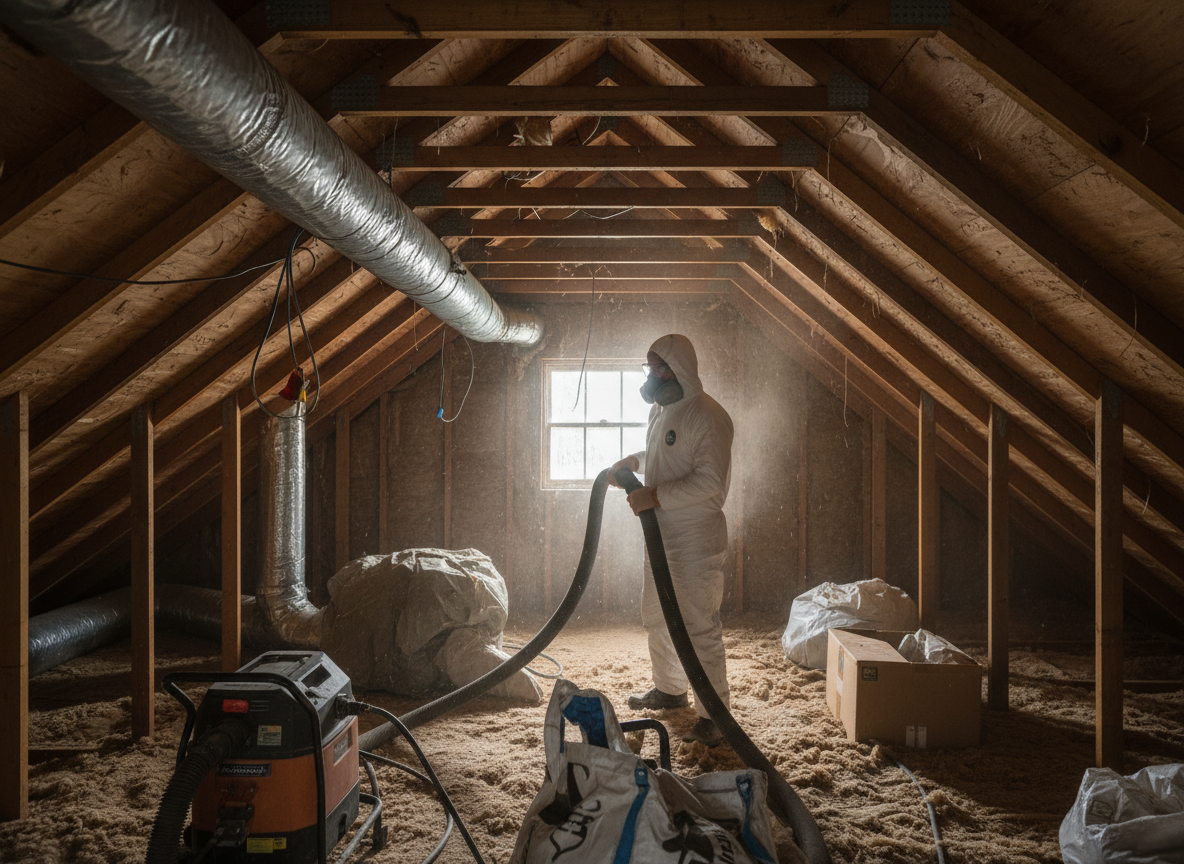
York's housing stock includes many Victorian and Edwardian terraces plus 1960s-70s semis where closed-cell spray foam was often applied directly to roof decks or cavity walls. These installations frequently trap condensation because the city's damp winters and proximity to the River Ouse create persistent moisture loads that the foam cannot vent. Removal requires cutting the foam into manageable sections while protecting original lath and plaster ceilings that are common in Heslington and central York terraces.
Local building regulations in the York area now require clear evidence that any replacement insulation meets current ventilation standards after spray foam extraction. Technicians must also account for the shallow roof pitches typical of North Yorkshire farm conversions and the risk of disturbing asbestos-containing materials in pre-1980 lofts. Proper negative-air containment is essential during removal to prevent foam dust migrating through shared chimney stacks found in many York streets.
Seasonal timing matters here because winter work in unheated attics can cause the foam to become brittle and fragment more readily, while summer humidity can make adhesive residue harder to strip from timber joists. Crews working from the Providence House base can reach most York postcodes within thirty minutes, allowing same-day response when water ingress is reported after heavy rainfall events common along the A64 corridor.
Technician insight
In York, the thing that catches most people out with insulation removal service is how often spray foam was sprayed over damp joists in older terraces near the Ouse; the foam hides rot until removal reveals it and forces extra timber treatment before any new insulation can go in.
Heslington Terrace Loft
Homeowner in a 1930s Heslington terrace reported musty smells after heavy autumn rain. Inspection found closed-cell foam trapping moisture against rafters with early rot. We removed the foam under containment, treated the affected timber, and restored ventilation so the loft could dry before any new insulation was considered.
How it works
- 1
Site Assessment
Inspect loft or wall cavities in the York property, identify foam type, check for moisture damage, and note ventilation paths affected by local weather exposure.
- 2
Containment Setup
Install negative-air machines and floor protection suited to older floorboards and shared walls typical in North Yorkshire terraces.
- 3
Foam Extraction
Cut and remove spray foam in sections while preserving original timbers and avoiding disturbance to any existing insulation layers.
- 4
Surface Cleaning
Strip residual adhesive from joists and rafters, then vacuum all dust before final inspection.
- 5
Ventilation Check
Confirm roof space meets current York building standards for airflow once the foam is gone.
Pricing
Upfront quotes issued after on-site inspection of the York property.