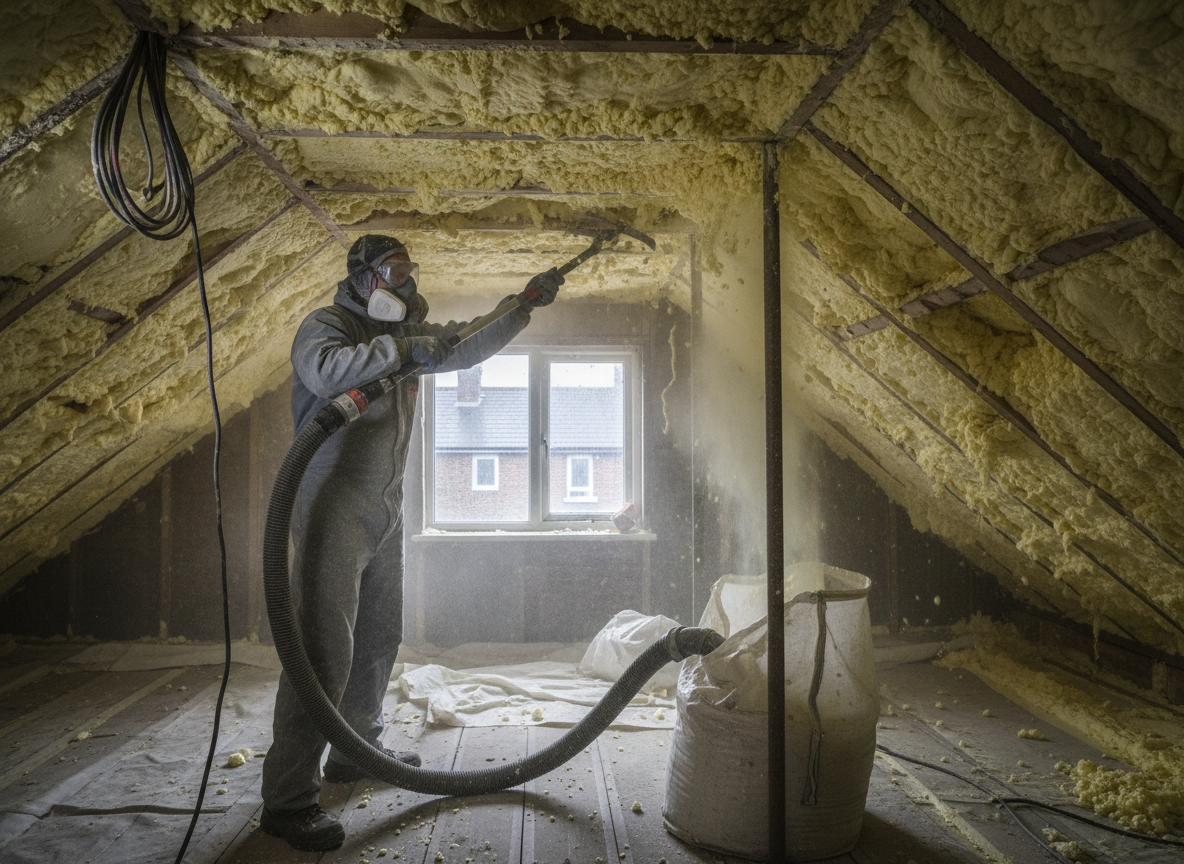
Open cell spray foam bonds loosely to joists and lath in many York terraces and semi-detached houses built before 1930. Once moisture from North Yorkshire’s frequent rain enters the foam it stays there, feeding mould on timber that already sits close to ground level in the city’s low-lying districts. Removal crews must cut the foam in controlled sections rather than pulling it in sheets, because sudden tension can crack original ceiling plaster in homes near the city walls or along the Ouse.
Access routes in Heslington and Fulford often involve narrow ginnels or shared loft hatches that limit the size of extraction equipment. Crews therefore bag material on site and carry it out by hand to avoid dragging debris through finished rooms. In winter the cold makes the foam more brittle, which helps separation but increases dust; summer humidity keeps the material flexible and raises the risk of smearing residue onto rafters.
Disposal must follow Environment Agency rules for construction waste because the foam contains flame retardants. After the bulk is removed, surfaces are vacuumed and inspected for remaining cells that could re-expand if painted over. Homeowners in the York area are advised to delay re-insulation until any underlying damp in the external walls has been traced and repaired.
Handling Historic Fabric in York
Pre-1919 properties around the Minster and along Micklegate often have lime plaster and thin laths that tear easily. Technicians work with hand tools and low-pressure scrapers to preserve the original ceiling structure while still clearing every trace of foam from the voids.
Technician insight
In York, the thing that catches most people out with open cell spray foam removal is how the foam soaks up water from the frequent rain that soaks into the brickwork of pre-1930 terraces around Heslington and Layerthorpe, then holds it against the joists long after the loft appears dry.
Loft in a 1920s terrace near the city walls
Homeowner noticed musty smell and sagging ceiling plaster after heavy winter rain. Inspection found open cell foam saturated along the eaves where the roof meets the parapet wall. Crews cut the foam in small sections to avoid tearing the original laths, removed all material, and left the timber to dry before any new insulation was considered.
How it works
- 1
Site Assessment
Inspect loft or wall cavities to map foam depth, note any timber decay, and check access points in the specific York property.
- 2
Containment Setup
Seal rooms below the work area with plastic sheeting and negative air machines to keep dust from spreading through the house.
- 3
Foam Extraction
Cut and bag open cell foam in sections, working around joists and services without damaging historic lath and plaster.
- 4
Surface Cleaning and Disposal
Vacuum residue, wipe rafters, then remove bagged material to licensed waste facilities serving the York area.
Pricing
Cost depends on access difficulty, depth of foam, and whether additional timber treatment is required after removal.