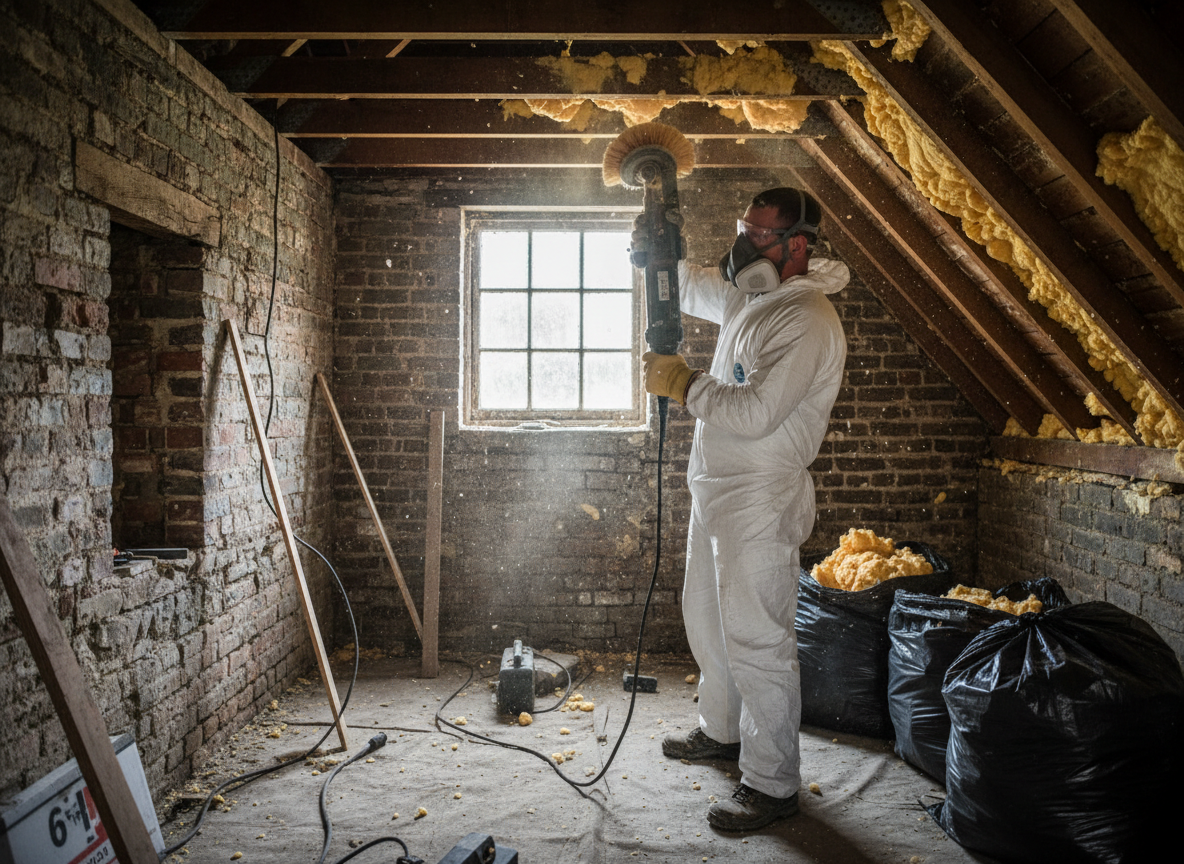
York's older properties, particularly Victorian terraces and Georgian homes around the city centre and Heslington, often received spray foam in lofts or wall cavities during earlier energy upgrades. The closed-cell material bonds tightly to brick, stone and timber, trapping moisture against walls that were built to breathe. Removal requires controlled cutting and scraping to avoid damaging original lath and plaster or exposing hidden rot in joists. Weather patterns in the York area, with frequent damp winters and sudden temperature swings, make timing critical because residual moisture can reappear weeks after the foam is gone.
Technicians working from the Providence House base assess each job for foam depth, substrate condition and ventilation paths before starting. In many North Yorkshire homes the foam was applied over existing insulation or directly onto uneven stone, creating pockets that standard tools miss. Edge cases include listed buildings where permission may be needed and properties near the River Ouse where rising damp has already interacted with the foam. Proper disposal of the removed material follows local waste rules, and the team leaves cavities clean enough for inspection before any new insulation is considered.
Homeowners in York sometimes attempt DIY removal with basic scrapers, which leaves thin layers that continue to hold moisture and attract mould. Professional equipment reaches behind joists and into corners without gouging historic fabric. After extraction the team checks for timber decay and advises on drying times suited to the region's humidity levels before any follow-up work begins.
Technician insight
In York the thing that catches most people out with spray foam insulation removal is how quickly moisture reappears in the solid brick walls once the foam is stripped, especially in properties around the city walls and Heslington where winter rain soaks the masonry.
Loft foam removal in a Heslington terrace
The homeowner noticed mould along the eaves of a 1930s terrace near the University of York campus. We found closed-cell foam bonded directly to the rafters with pockets of trapped condensation. After careful removal and debris clearance the joists dried over the following weeks and no further mould returned.
How it works
- 1
Initial Assessment
Survey the property in York to locate all foam areas and check for existing moisture or structural issues.
- 2
Site Preparation
Protect floors, electrics and ventilation points before cutting begins.
- 3
Controlled Removal
Use specialist tools to peel foam from walls, ceilings and cavities while preserving original surfaces.
- 4
Cleanup and Inspection
Remove debris, vacuum residues and inspect for hidden damp or timber damage before handover.
Pricing
Cost depends on foam thickness, access difficulty and property size; an upfront quote follows the initial survey.