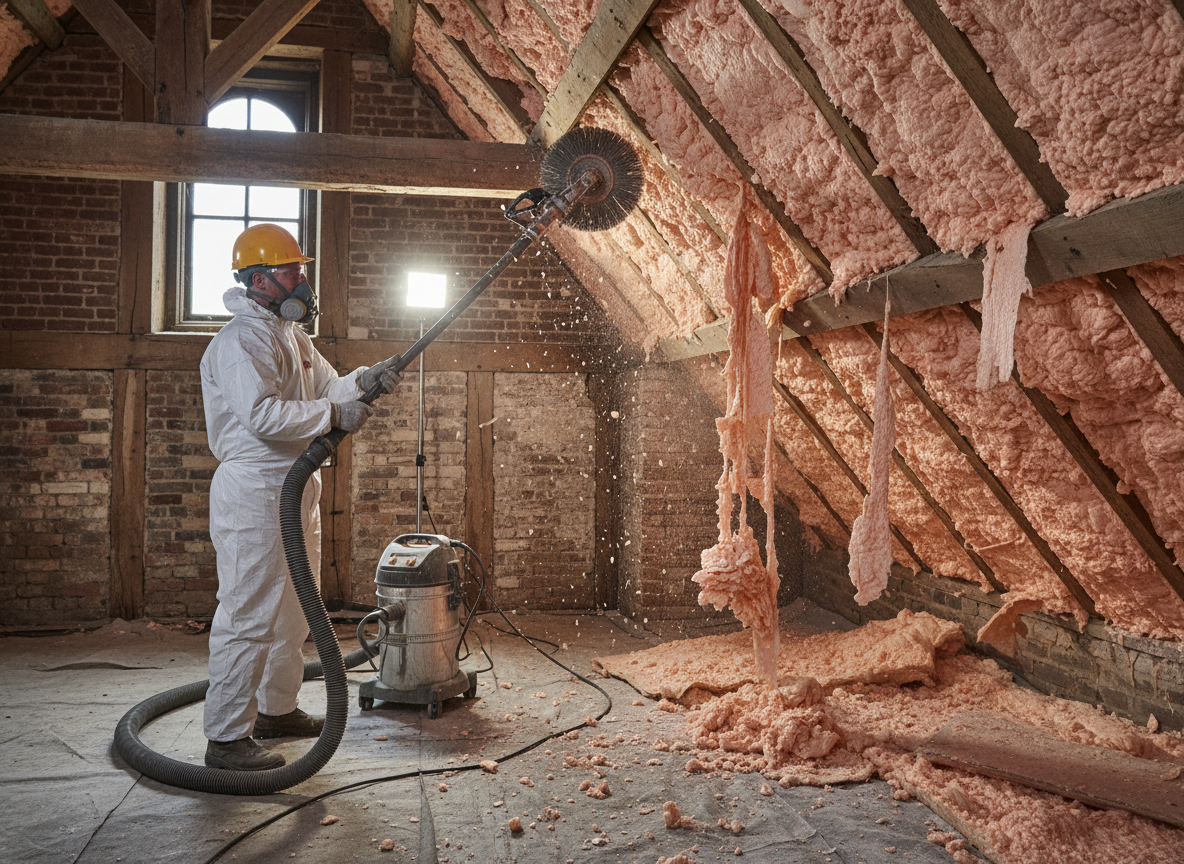
Thermal spray foam removal in York often involves older brick and stone homes built before modern damp-proofing standards. In neighborhoods like Heslington and along the River Ouse, closed-cell foam applied decades ago traps condensation against masonry walls, especially during the region's long wet winters. Removing it requires careful cutting and extraction to avoid damaging original timber joists or lime plaster finishes that are common in North Yorkshire housing stock.
Access is frequently restricted in terraced properties and converted barns around York, where foam fills roof voids or underfloor spaces with limited headroom. Winter temperatures below freezing can make the foam brittle and easier to section, but spring thaws increase the risk of water ingress if extraction leaves any residue. Technicians must work methodically to prevent debris from falling into electrical runs or drainage channels typical of these older buildings.
Regulatory considerations include ensuring ventilation is restored to current building standards after removal, as blocked cavities can lead to mold in York's humid climate. Homeowners should expect inspection of adjacent insulation and potential need for replacement with breathable materials suited to period properties.
Technician insight
In York, the thing that catches most people out with thermal spray foam removal is how often the foam in 1930s-1960s homes around Heslington has wicked moisture into the brickwork during our prolonged damp winters, so the job expands once you open the first section.
Heslington Terrace Extraction
Foam in a 1950s terrace near the university had caused persistent damp on the gable wall. Inspection showed closed-cell material blocking original weep holes. We sectioned and removed the foam in stages, cleared residue from the cavity, and restored ventilation. The wall dried out without further intervention.
How it works
- 1
Site Assessment
Inspect the property in York to map foam locations, check for moisture damage, and identify access points in roof voids or walls.
- 2
Containment Setup
Protect floors, electrics, and living areas from dust and debris before cutting begins.
- 3
Foam Extraction
Section and remove thermal spray foam using specialist tools suited to tight York attic and underfloor spaces.
- 4
Cleanup and Ventilation Check
Clear all residue, restore airflow, and advise on follow-up insulation options for the local climate.
Pricing
Cost depends on access difficulty, depth of foam, and property age in the York area.