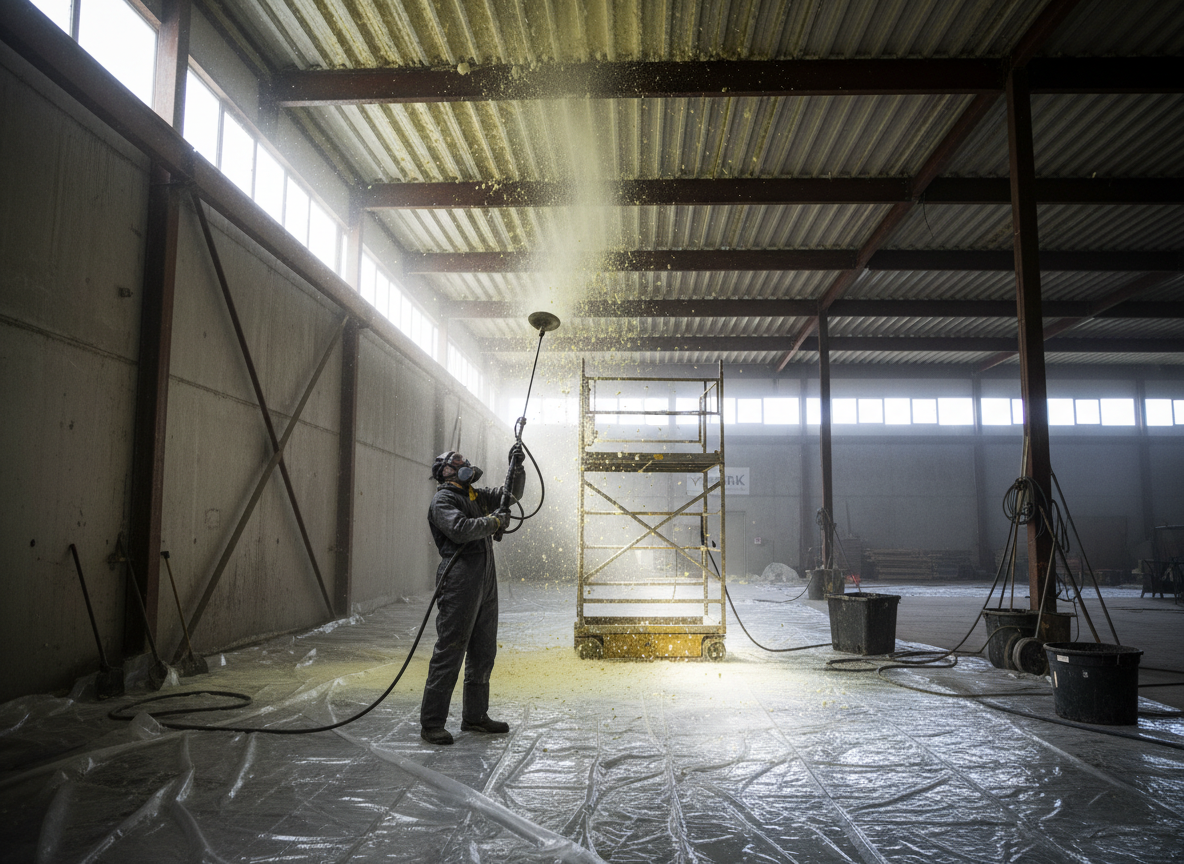
Warehouses in York often feature older steel-framed or brick structures built near the railway lines and industrial zones around Layerthorpe. Spray foam applied decades ago frequently traps condensation against metal cladding, especially during the damp winters when the River Ouse rises. Removal requires careful separation of the foam from these surfaces without damaging the underlying structure or releasing fibres into the open interior space.
Edge cases include foam that has bonded to asbestos-containing panels common in pre-1980s units near the A64 corridor. Technicians must first confirm substrate type before mechanical or chemical stripping begins. Ventilation systems in these buildings are usually minimal, so negative air machines and sealed containment become essential to prevent dust migration into adjacent storage areas still in use.
York planning rules for industrial sites can require notification when large volumes of insulation waste are generated. Disposal must follow local landfill protocols for treated foam, and crews coordinate with licensed carriers to handle the material from sites like those in Heslington or Fulford. Work is scheduled around operating hours to avoid disrupting warehouse logistics.
Technician insight
In York, the thing that catches most people out with Warehouse spray Foam removal is the older brick and steel warehouses near the Ouse that hold moisture from seasonal flooding; the foam hides rot until removal starts and suddenly reveals extensive substrate repairs needed before any new insulation can go in.
Heslington Warehouse Foam Removal
Problem: Spray foam on the ceiling of a working warehouse near Innovation Close had begun to sag and trap condensation. What we found: Hidden water damage along steel beams from past Ouse flooding. What we did: Set up full containment, removed the foam in sections, and cleared all residue without halting operations. Outcome: Space returned to use the same day with surfaces ready for inspection.
How it works
- 1
Site Assessment
Inspect warehouse structure, foam depth, and any hidden moisture or substrate issues from ground level and access equipment.
- 2
Containment Setup
Install sealed barriers and negative air filtration to isolate the work zone from active storage and loading areas.
- 3
Foam Extraction
Use mechanical scraping and approved solvents to remove foam in layers while protecting steel and brick surfaces.
- 4
Waste Removal and Cleanup
Bag and transport waste per local regulations, then clean surfaces and verify no residue remains before reopening the space.
Pricing
Upfront quotes after on-site inspection; cost depends on warehouse size, foam thickness, and access requirements.